
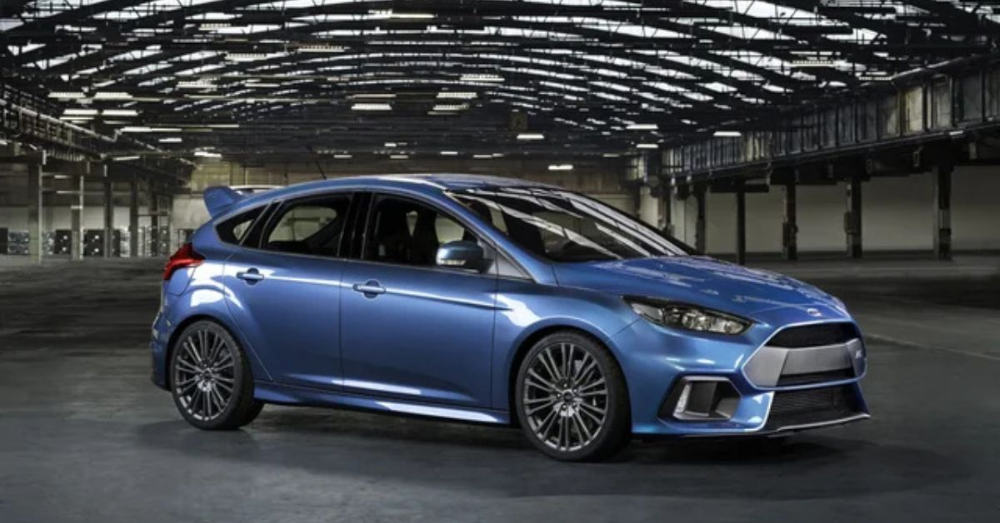
Last Friday brought a 27-year run to an end as the final Ford Focus rolled off the assembly line at the Saarlouis plant in Germany. After more than 12 million cars sold worldwide, the compact hatchback that helped define Ford’s European lineup is gone for good. The last one, a white five-door hatchback, marks the company’s complete exit from traditional passenger cars in Europe.
- The final Focus was produced on November 14, 2024, ending 27 years of continuous production at the Saarlouis facility in Germany.
- Ford’s European market share collapsed from 7.2% in 2015 to just 3.3% by September 2025 after discontinuing popular models like the Fiesta, Mondeo, Ka, and now the Focus.
- Despite CEO Jim Farley calling them the “boring car business,” traditional hatchbacks from competitors like Volkswagen Golf and Renault Clio remain among Europe’s best sellers.
The Last Car Standing
The Focus was one of the last gasoline-powered passenger cars Ford still made for European customers. Now that it’s gone, the company’s entire European lineup consists of SUVs, crossovers, and commercial vehicles. Drive through any European city, and you’ll still see plenty of older Focus models on the road, but no new ones will join them.
What’s wild is that the Focus was still selling reasonably well. It ranked as Ford’s third-best-selling model in Europe through September 2024, moving 51,617 units despite everyone knowing it was headed for the chopping block. That’s down from 67,820 in the same period the previous year, but it’s hardly a disaster.
Why Kill a Car That People Actually Buy?
CEO Jim Farley explained the decision in a 2024 interview with CAR Magazine, saying the company wanted to get “out of the boring-car business and into the iconic-vehicle business.” He admitted that cars like the Mondeo, Focus, and Fiesta were loved by customers but never justified more investment because profit margins were too thin.
Here’s the thing, though: killing these “boring” cars has absolutely hammered Ford’s presence in Europe. Back in 2015, Ford held a 7.2% market share across the continent. By September 2025, that number cratered to just 3.3%. That’s not a gentle decline. That’s falling off a cliff.
The company went from being Europe’s second-biggest brand a decade ago to 12th place. Half their market share vanished in ten years. Meanwhile, competitors who kept making traditional cars are doing just fine. The Volkswagen Golf, Renault Clio, and Dacia Sandero dominated the European sales charts in 2024, proving people still want hatchbacks and sedans.
What Happens to the Factory?
The Saarlouis plant, which has built the Focus since 1998, now sits largely empty. Ford has kept it open with about 1,000 workers handling parts logistics, down from over 6,500 employees at its peak. The company says the facility will stay operational through 2032, but nobody knows what it’ll actually produce.
Ford looked for buyers, with reports mentioning Chinese EV maker BYD and other manufacturers as potential investors. None of those deals worked out. The plant’s future remains a giant question mark.
The Replacement That Isn’t Really a Replacement
Ford isn’t planning to build another compact hatchback to fill the gap left by the Focus. Instead, early reports suggest they’re cooking up another mid-size crossover that’ll debut around 2027 at the Valencia plant in Spain. It’ll sit somewhere near the Focus in size, but ride higher and cost more.
The problem? Ford already sells the Kuga (called the Escape in North America) in that size range. Adding another similar vehicle seems like a strange way to fix the sales slide caused by canceling cars people actually wanted.
Ford also launched the electric Explorer and Capri in 2024, both built on Volkswagen’s EV platform. Neither has set the sales charts on fire. The Capri name particularly frustrated enthusiasts since the original was a low-slung sports coupe, not a tall crossover.
Looking Back at the Focus Legacy
The Focus first appeared in 1998 and quickly became one of Ford’s most important global models. Over nearly three decades, it sold more than 12 million units worldwide, including about 206,000 in Australia before being discontinued there in 2020.
The last two cars produced won’t hit the road. One head goes to the Saarlouis municipal museum, while the other will be raffled among plant employees. That’s a quiet ending for a car that meant so much to so many drivers.
What This Means for European Buyers
Ford’s bet on crossovers and SUVs leaves a huge chunk of the European market to competitors. People shopping for affordable, practical hatchbacks now have to look elsewhere. Toyota, Volkswagen, Renault, and Stellantis brands continue offering traditional cars alongside their crossovers and are grabbing the market share Ford walked away from.
The decision to back away from the European passenger car market might make sense on a spreadsheet, but watching a once-dominant brand shrink this dramatically raises serious questions about the strategy. Time will tell if Ford can claw back what it’s lost with a lineup full of crossovers.
The Road Ahead for Ford Europe
Ford hired Jim Baumbick as its first dedicated Europe boss in three years, tasking him with developing products relevant to European customers. The company promises new models are coming, but details remain scarce.
The automaker also backed away from its plan to go fully electric in Europe by 2030, citing weaker demand than expected. Future models will likely offer both hybrid and electric powertrains, giving buyers more choices.
Whether Ford can recover from losing nearly half its European market share in a decade remains unclear. What is clear is that walking away from successful, high-volume cars like the Focus comes with serious consequences.