
Walk through any dealership parking lot and you’ll see rows of crossovers gleaming under the lights. Here’s what most people miss though. While SUVs grab the headlines and the sales numbers, midsize sedans are quietly getting better than ever. Manufacturers who stuck with sedans are pouring real money into making them faster, smarter, and more efficient than their SUV cousins.
- The 2025 midsize sedan market has shrunk to just the strongest competitors, but that means every remaining model is now top-tier with better tech, efficiency, and driving dynamics than previous generations
- Hybrid powertrains have become the secret weapon for sedans, with models like the 2025 Toyota Camry going hybrid-only and achieving up to 53 MPG while still delivering 225-232 horsepower
- Sedan buyers are getting rewarded with better resale values, lower costs of ownership, and handling that no top-heavy crossover can match, especially when shopping for trusted nameplates at local dealerships
The Survival of the Fittest
The sedan market in 2025 looks nothing like it did a decade ago. Ford killed the Fusion. Chrysler dropped the 200. Even Chevy’s Malibu is driving into its sunset year. But you know what? That’s actually made things better for sedan shoppers. The automakers that stayed in the game are the ones who know how to build them right. Toyota, Honda, Hyundai, Kia, and Nissan have doubled down on their sedan offerings instead of running away.
Take a look at what’s still standing. The Honda Accord just keeps getting better, scoring a 9.3 out of 10 in recent reviews. The Hyundai Sonata and Kia K5 bring styling that turns heads and features you’d expect in cars costing $10,000 more. And then there’s the Toyota Camry, which remains America’s best-selling sedan by a country mile. These aren’t holdovers from a bygone era. They’re the cream that rose to the top.
Hybrids Are Taking Over
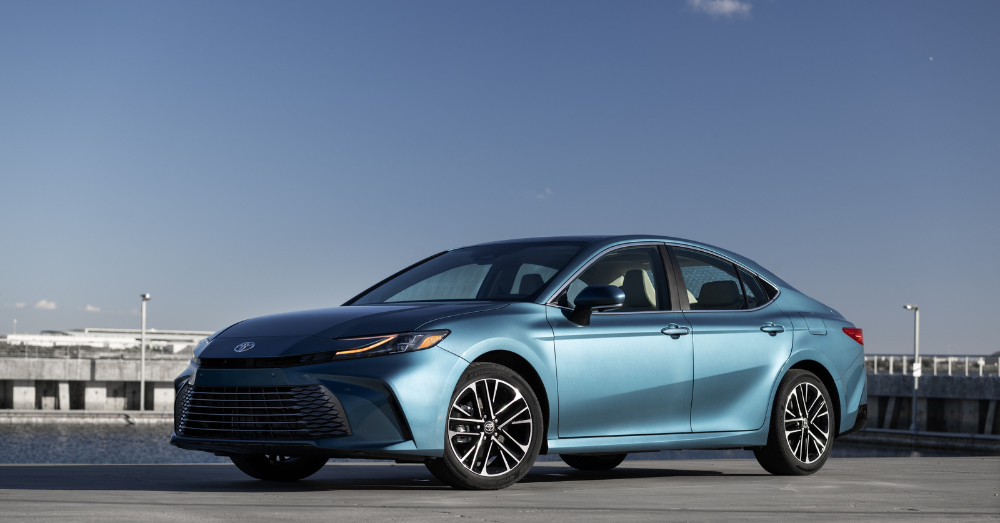
If you’re shopping for a new sedan in 2025, you’re probably buying a hybrid whether you planned to or not. Toyota made the boldest move by making every single 2025 Camry a hybrid. No gas-only option. No V6. Just a 2.5-liter four-cylinder paired with electric motors that deliver between 225 and 232 horsepower depending on whether you choose front-wheel or all-wheel drive.
The numbers tell the story. The base Camry LE with front-wheel drive hits 53 MPG in the city and 50 MPG on the highway. That’s better fuel economy than most compact cars, wrapped in a roomy midsize package. Honda followed suit with the Accord Hybrid achieving 48 MPG combined. The Hyundai Sonata Hybrid pushes 51 MPG on the highway. For buyers who remember when hybrids meant sluggish acceleration and weird engine noises, these new systems deliver instant torque off the line and smooth, quiet operation around town.
The Real-World Advantages Nobody Talks About
Here’s what the SUV commercials don’t mention. Sedans still drive better. That lower center of gravity means you can take corners with confidence that would make a crossover lean and complain. The 2025 Camry handles with what reviewers call “surprising verve” thanks to accurate steering and a planted feel through turns. The Mazda6, though aging, still shows how good a well-tuned sedan can feel on a curvy back road.
Then there’s the money side. Those shopping for a Toyota Camry Near Fishers, IN are making a smart financial call because sedans from trusted nameplates hold their value better than you’d think. The Camry loses just 37.7 percent of its value over five years, well under the segment average. That means when it’s time to trade in, you’re getting more money back. Insurance costs less too because sedans don’t carry the high theft rates and expensive repair bills of lifted vehicles.
What’s Actually New for 2025
The changes go deeper than new grilles on familiar bodies. The Kia K5 ditched its jerky dual-clutch transmission for a smooth eight-speed automatic and added Kia’s latest dashboard screens. The Nissan Altima, while not setting any performance records, comes loaded with driver assistance features as standard equipment at a starting price of just $27,000. The Mazda3 added new entry-level trims that brought the price down while keeping the premium feel Mazda is known for.
Inside, you’re getting technology that was luxury-car exclusive just a few years ago. The Camry offers 12.3-inch screens for both the digital gauge cluster and infotainment. Wireless Apple CarPlay and Android Auto come standard across most models. Heated and ventilated seats, panoramic sunroofs, and premium audio systems are available on mid-level trims, not just the top-spec versions.
Who’s Actually Buying Sedans
About 24 percent of new car buyers still choose sedans, and they’re not doing it out of nostalgia. They’re the ones who did the math and realized they don’t need to haul seven people and a jet ski every weekend. Commuters love the fuel savings. Parents with older kids appreciate the easier entry and exit compared to climbing into a lifted SUV. Enthusiast drivers know that sporty sedans like the K5 GT with its 290-horsepower turbo engine deliver more smiles per gallon than any family crossover.
The sedan market might be smaller, but it’s smarter. Models that survived got there by being genuinely good at what they do. While crossovers continue to rule sales charts, the midsize sedan segment in 2025 offers some of the best values, most efficient powertrains, and most enjoyable driving experiences you can find on dealer lots today.
Your Best Move Right Now
If you’re in the market, this is actually a great time to buy a sedan. Dealers want to move them, so incentives can be better than on hot-selling SUVs. The remaining models are all-stars in their segment. And with hybrid technology now standard or available across the board, you’re getting tomorrow’s efficiency today. The SUV wave isn’t stopping, but for the roughly quarter of buyers who want something that drives better, costs less to run, and still has room for the whole family, 2025’s midsize sedans are worth a serious look.